
UK Safety Requirements - Portable EV Charging
Portable EV chargers—often called granny chargers or Mode 2 chargers—offer flexibility for drivers who need to top up from a standard domestic socket. But because they draw significant electrical load over long periods, the UK has developed a framework of safety expectations to protect consumers, vehicles, and the wider electrical grid.

Regulatory Framework
Portable EV chargers fall under several overlapping UK regulations designed to ensure electrical safety and responsible energy use:
Electric Vehicles (Smart Charge Points) Regulations 2021 – applies mainly to fixed chargers but sets expectations for safety, interoperability, and anti‑tampering features.
Product Safety and Standards Regulations – ensures chargers meet UKCA/CE conformity, safe design, and proper testing.
IET Wiring Regulations (BS 7671) – governs safe connection to domestic electrical systems.
Electrical Equipment (Safety) Regulations 2016 – requires safe construction and clear instructions for electrical devices.
While portable chargers are not classed as “smart charge points,” they must still comply with general product safety law and electrical safety standards.
Key Safety Requirements for Portable EV Charging
Electrical Load and Socket Safety
- Use only properly rated sockets: Standard UK sockets are typically rated at 13A, but continuous high‑load use can cause overheating.
- Avoid extension leads: Most manufacturers prohibit them due to fire risk.
- Check for socket damage: Loose or heat‑marked outlets should never be used.
Built‑In Protective Features
Portable chargers must include:
- Residual Current Device (RCD) protection – typically Type A or Type B, to prevent electric shock.
- Overcurrent and thermal protection – to shut down charging if temperatures rise dangerously.
- Ingress protection – usually IP65 or higher for outdoor use.
These features align with the safety expectations outlined in UK smart charging guidance, which emphasises robust protection systems.
Cable and Connector Safety
- Use only manufacturer‑approved cables.
- Inspect for wear or damage before each use.
- Ensure connectors remain dry and free from debris.
Environmental Considerations
- Avoid charging in standing water or during severe weather unless the charger is rated for such conditions.
- Ensure adequate ventilation around the plug and charger body.
Installation and Usage Guidance
Even though portable chargers do not require professional installation, users must follow safe‑use guidelines:
- Plug directly into a wall outlet—never into multi‑adapters.
- Uncoil cables fully to prevent heat buildup.
- Monitor the charger periodically during long sessions.
- Avoid running cables across public pathways to prevent trip hazards.
The UK government stresses the importance of safe installation and operation for all EV charging equipment, even in non‑fixed scenarios
Compliance and Labelling Requirements
Portable EV chargers sold in the UK must include:
- UKCA or CE marking
- Clear safety instructions
- Manufacturer identification
- Electrical ratings and warnings
These requirements fall under the Office for Product Safety and Standards (OPSS), which oversees compliance for EV charging equipment
Best‑Practice Recommendations for Users
To maximise safety and equipment lifespan:
- Charge at lower currents when possible
- Use a dedicated outdoor socket installed by a qualified electrician
- Upgrade to a fixed smart charger for regular home charging
- Store the charger properly to avoid moisture and cable damage
Understanding the UK’s Product Safety and Standards Regulations
The phrase “Product Safety and Standards Regulations” in the UK refers not to a single law, but to a framework of legislation overseen by the Office for Product Safety and Standards (OPSS). This framework ensures that any product placed on the UK market—whether a portable EV charger, a toy, or a household appliance—is safe for consumers to use.
Below is a breakdown of what this system includes, why it matters, and how it affects products like portable EV chargers.
What the Regulations Cover
The UK’s product safety regime is built on several key components:
- General Product Safety Regulations 2005 (GPSR) – the core law requiring all consumer products to be safe before being sold.
- Sector‑specific safety regulations – e.g., electrical equipment, toys, machinery.
- Product Safety and Metrology Regulations (post‑Brexit amendments) – updated rules that replaced EU references after EU exit.
- OPSS enforcement and guidance – the government body responsible for oversight, recalls, and compliance monitoring.
Together, these rules ensure that manufacturers, importers, and distributors meet strict safety obligations.
Who Must Comply?
The regulations apply to all economic operators involved in supplying a product:
- Manufacturers
- Importers
- Distributors/retailers
Each has specific duties, such as ensuring safe design, maintaining documentation, and providing clear instructions.
Key Safety Obligations
Under the UK product safety framework, suppliers must:
- Ensure products meet essential health and safety requirements
- Maintain a technical file demonstrating compliance
- Provide clear safety instructions to consumers
- Issue a Declaration of Conformity (for regulated products)
- Apply UKCA or CE marking where required
- Monitor products on the market and take action if risks emerge
- Cooperate with enforcement authorities such as OPSS
These obligations apply equally to portable EV chargers, which must be designed and tested to prevent electrical hazards.
Why These Regulations Matter for Portable EV Chargers
Portable EV chargers are electrical devices that draw high current for long periods. Under UK product safety law, they must:
- Be electrically safe under the Electrical Equipment (Safety) Regulations
- Include protective devices such as RCDs and thermal cut‑offs
- Be labelled correctly with ratings, warnings, and manufacturer details
- Come with clear instructions for safe use
- Undergo conformity assessment before being sold
This ensures that consumers are protected from fire, shock, and overheating risks.
How OPSS Enforces the Rules
The Office for Product Safety and Standards:
- Monitors the market for unsafe products
- Issues recalls and alerts when risks are identified
- Provides guidance to businesses and regulators
- Supports local authorities in enforcement
Their work ensures that unsafe chargers, adapters, and cables are removed from sale.
Shop EV Charging Categories
-

13A Portable EV chargers 3kW
13A portable EV chargers are the simplest way to charge your electric...
-

Commercial EV Chargers (plug-in)
⚡ Commercial EV Chargers with Commando Plugs | Fast, Safe Charging for...
-
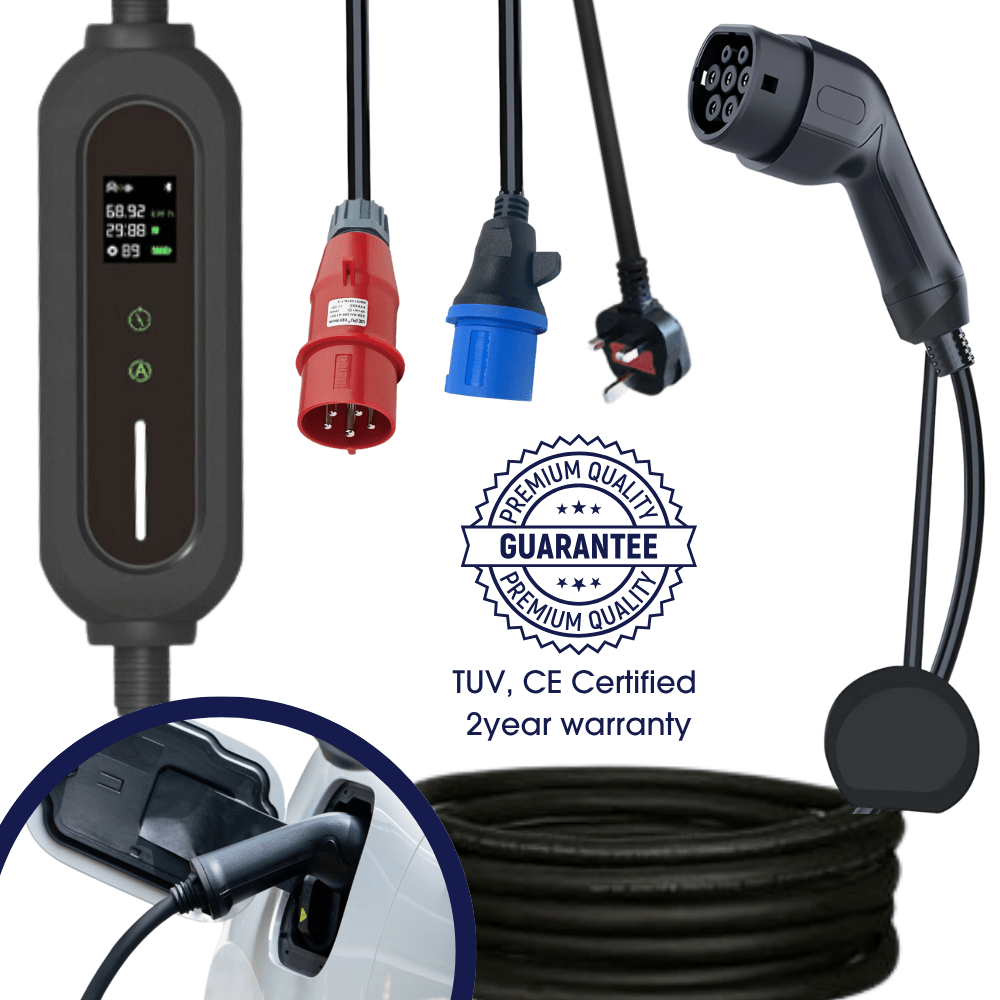
Type 2 Portable EV Chargers
Portable Electric Vehicle (EV) chargers are an essential part of any EV...
-

All EV charging products
See our full range of plug in EV chargers, EV charging cables...


