Type 1 vs Type 2 EV Cables: Explained
Type 1 vs Type 2 EV Cables: The Ultimate Compatibility Guide
Plugging in your electric vehicle or plug-in hybrid should be as straightforward as charging your mobile phone. However, if you are new to electric driving, the technical jargon around charging connectors can quickly feel overwhelming.
The most common point of confusion for UK drivers is the difference between a Type 1 and a Type 2 charging plug. Choosing the correct one is vital, as a Type 1 cable physically will not fit into a Type 2 vehicle socket, and vice versa.
Fortunately, breaking down the differences is simple. Here is everything you need to know to buy your next cable with total confidence.

What is a Type 1 EV Cable? (The 5-Pin Plug)
The Type 1 connector is an older charging standard historically favored by American and Japanese vehicle manufacturers.
- How to identify it: It features a perfectly round barrel design containing 5 pins, alongside a distinct mechanical latching clip on top that locks the plug physically into your car.
- Charging limits: Type 1 cables only support Single-Phase charging, meaning they cap out at a maximum power delivery of 7.4kW.
- Who drives them? Type 1 Plugs are primarily found on older electric vehicles (mostly manufactured pre 2015) and select legacy plug-in hybrids. Common examples include the original Nissan Leaf (Gen 1), Mitsubishi Outlander PHEV, and older Kia Soul EVs.
- 🛒 Need a replacement plug for an older vehicle? Explore our heavy-duty, weather-resistant range of Type 1 EV Charging Cables.
What is a Type 2 EV Cable? (The 7-Pin Plug)
The Type 2 connector (often referred to as the Mennekes plug) is the official, mandated standard for all modern electric vehicles sold across the UK and Europe. If you bought your electric car recently, it almost certainly uses this standard.
- How to identify it: It features a round design but with a completely flat top edge, housing a 7-pin configuration. Unlike Type 1, there is no outer latch on the cable itself; instead, the car automatically locks the cable internally when you lock your vehicle doors.
- Charging limits: Type 2 cables are incredibly versatile. They easily handle standard 7.4kW Single-Phase home charging but can also support up to 22kW Three-Phase charging at public fast-charging stations.
- Who drives them? Virtually all modern EVs on British roads today—including the complete lineups from Tesla, Audi, BYD, BMW, Volkswagen, Kia, and Hyundai.
- Upgrading your current setup? Browse our premium collection of long-reach Type 2 EV Charging Cables, available in lengths from 5m up to 20m.

At-A-Glance Comparison Table
To make choosing completely effortless, use this quick breakdown to verify your requirements:
| Feature | Type 1 Cable | Type 2 Cable |
| Pin Configuration | 5-Pin Layout | 7-Pin Layout |
| Physical Shape | Completely round with a top latch | Round with a flat top edge |
| UK/European Standard | Legacy (Older Vehicles Pre 2018) | Modern Official Standard |
| Max AC Charging Speed | 7.4kW (Single-Phase) | 22kW (Three-Phase) |
| Locking Mechanism | Manual clip on the handle | Automatic internal vehicle lock |
Let Us Do the Work For You
Still unsure which plug style your vehicle requires? Don't risk buying the wrong model. Head over to our interactive Interactive EV Vehicle Selector Tool. Simply choose your car's manufacturer, model, and year, and our system will instantly filter out the guesswork, displaying only the 100% compatible cables and portable chargers engineered for your specific vehicle.
Shop EV Charging Categories
-

13A Portable EV chargers 3kW
13A portable EV chargers are the simplest way to charge your electric...
-

Commercial EV Chargers (plug-in)
⚡ Commercial EV Chargers with Commando Plugs | Fast, Safe Charging for...
-
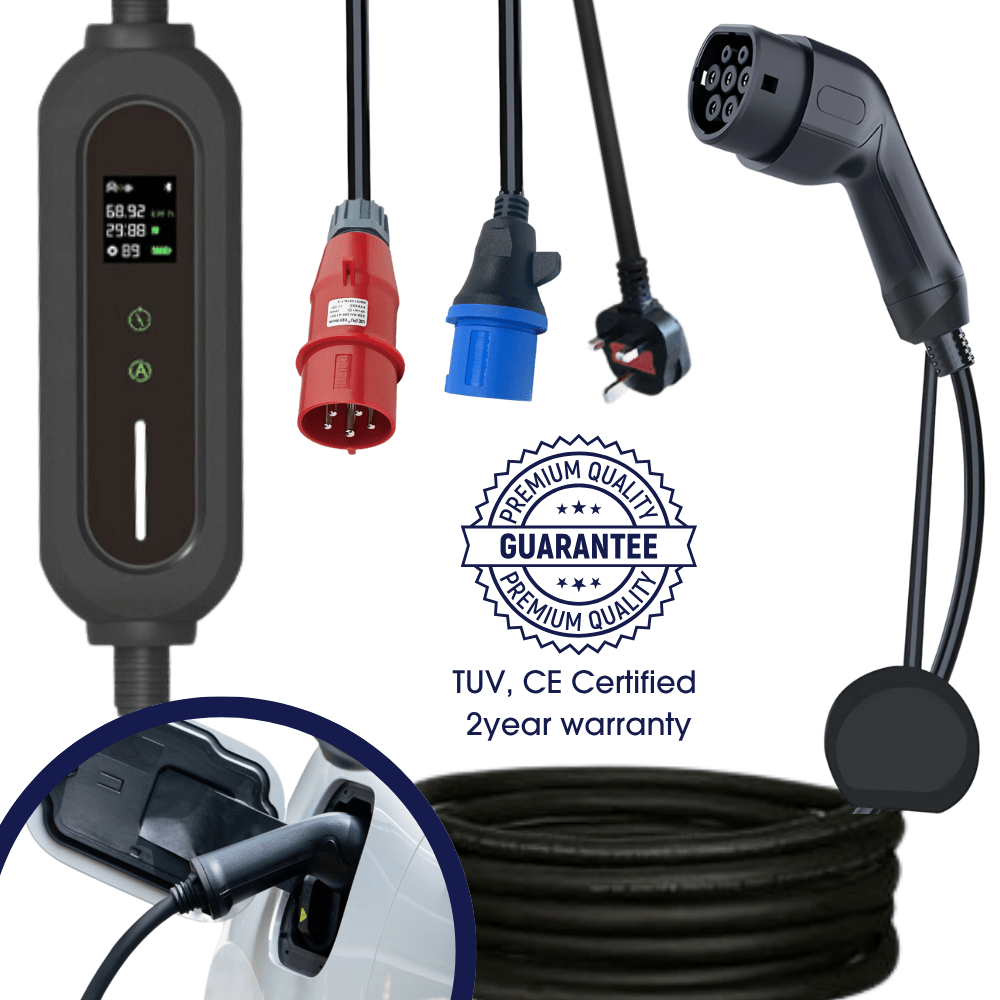
Type 2 Portable EV Chargers
Portable Electric Vehicle (EV) chargers are an essential part of any EV...
-

All EV charging products
See our full range of plug in EV chargers, EV charging cables...


